Manhattan Neighborhood Network TV Bootcamp

In mid-November I finished up the Manhattan Neighborhood Network’s (MNN) “Creating a TV Show Bootcamp.” The class is 4-week intensive teaching students how to use studio equipment and edit on Adobe Premiere Pro. The class culminates with a final capstone project of a 3–7-minute episode applying and demonstrating your knowledge. Let’s Write About has been on the network, but I wanted to take the next step to use the studio spaces of the network and better familiarize myself with a professional production.
Gray brick entrance to the Manhattan Neighborhood Network.

The class was really wonderful! It was a smaller size than usual due to COVID restrictions, so we had 5 students total while typically there are 12 students per class. This smaller size meant that in our studio practices we were always on a piece of equipment, giving us a truly hands-on learning experience. I was always working on either a camera, the control panel and switcher, the audio board, or being the talent in front of the camera which was also a cool perspective. Filming in front of my phone and filming in front of four professional cameras with studio lights on and around me are two vastly different experiences.

I was thankful for all the practice and repetition. I was pretty nervous about working on the equipment at first, especially the cameras. I have little to no experience in a studio setting and this is some expensive, high-end stuff. But with practice and supervision, the roles came easily enough. It’s also helpful to know that the studio has facilitators who are studio professionals employed by MNN to do most of the technical work and set-up of the equipment itself, so community producers and their crews are really doing the specific work of moving the camera, focusing them, setting up mics and getting levels on audio, and directing/switching on the control panel.
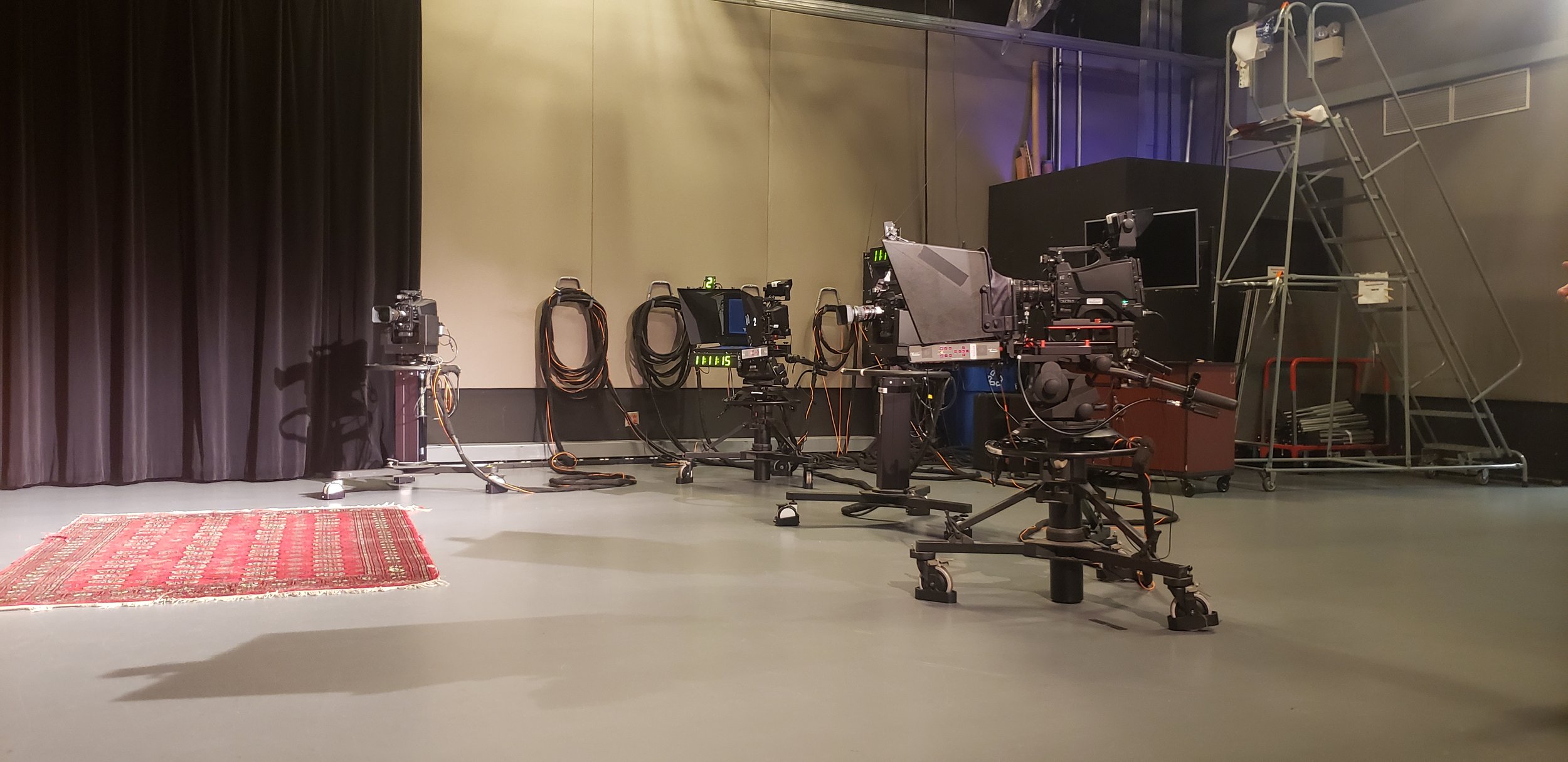
Cameras arranged in a professional TV studio.

On the software end, I came in with a fair understanding of Adobe Premier. However, I really just threw myself into it to make video content over the lockdown and subsequent job freeze, so it felt nice to take a big step back and get a full rundown of the basics of the program. Our instructor also took time to teach us her organizational strategy and gaining that insight from a media professional has already made my workflow so much better. Honestly, my workstation and cataloging were a bit (read: irredeemably) messy, mainly because I couldn’t conceive of a better system. As usually is the case, the simplest solution is the best and taking the time to rethink my set up with a clear model has made my editing flow smoother.

The final project was a cool opportunity to test the capacity of the studio. I decided to bring my collaborator Frankie into the studio with her partner and puppeteer Jim!

The project gave us an excuse to consistently rehearse together and also gave me an excuse to make my first official script rundown. Previously, Let’s Write About episodes involved me doing all the puppeteering with voice acting work from Frankie and other collaborators. In part because the show began during the COVID-19 lockdown and in part because filming more than one person or figure with a phone camera can be difficult, especially in an apartment without the space to arrange or rearrange a set. This change felt markedly different, the studio space and resources gave us the room to easily act together, delivering a more polished and professional performance which I’m excited to bring into all our future episodes.
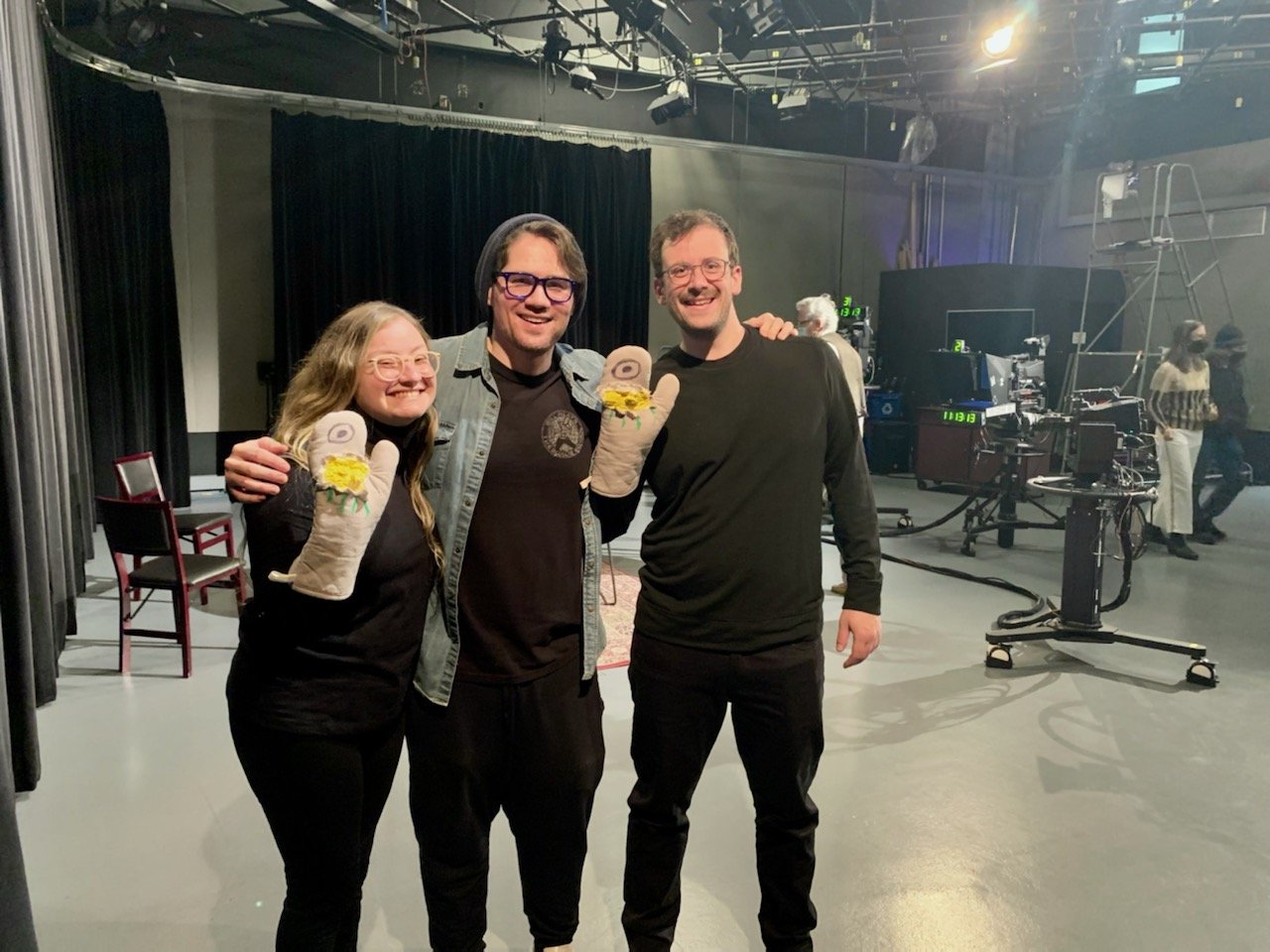
Three actors in a TV Studio

Another thing I wanted to try out was playing music through the studio itself. Previously I would start and stop the music on my laptop, over-filming to later edit my movements, and then Dane would adjust the audio and layer over the song in his audio post-production work. Now, the music can be seamlessly recorded at the same time we, in the studio, hear it live. It sounds small, but from a production/stress consideration it’s huge! No more stopping and starting or going back and forth. While the cueing will take a bit of practice, this first run through of it for the final project was wonderful and promising for what’s to come.

Finally, when we film our episodes, we’ll be able to arrange the lights and make use of the green screen in the studio! These are roles facilitators cover since they require quite a bit time, knowledge, and ladder climbing, but I’m looking forward to playing with some professional green screening after my early DIY attempts with Space Cacti episodes.

If you’re considering making some TV or even just curious about what the process is like, I highly recommend the class! MNN also offers a range of other courses for beginners and experts alike, so check those out too!

And, of course, stay tuned for more Let’s Write About!
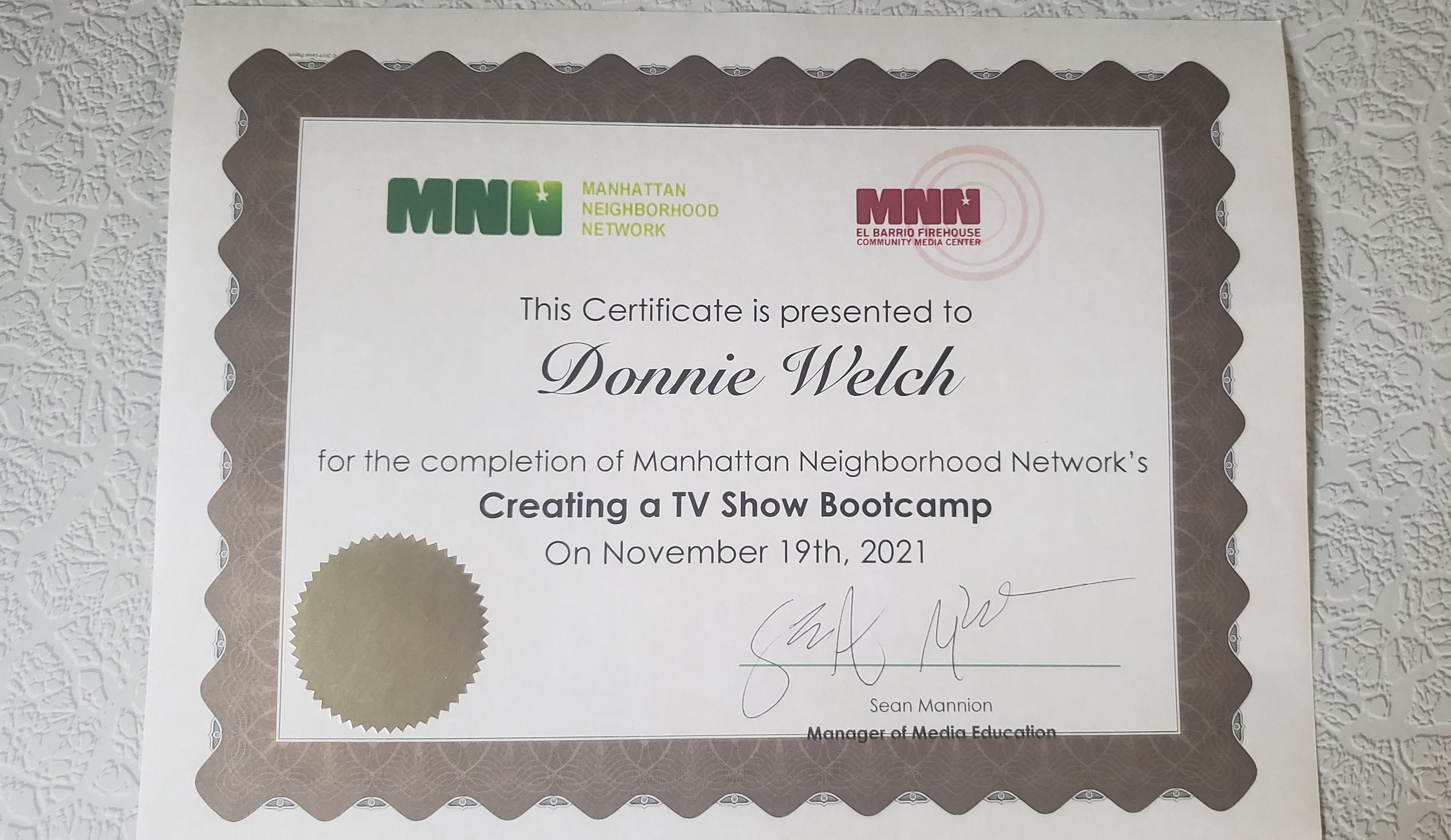
An ornate paper certificate from the Manhattan Neighborhood Network

A certificate of completion from the Manhattan Neighborhood Network for Donnie Welch for the Creating a TV Show Bootcamp with ornate border, signature, and sticker.
Manhattan Times Write Up

Excited to share a recent write up from my neighborhood weekly The Manhattan Times. I’ve copied the body of the article here for convenience, but you can head to their page to read it in context with photos. Click this link to head to the article!

Power Prose

By Sherry Mazzocchi

Play + poetry = power.

Inwood resident Donnie Welch’s new TV show, Let’s Write About, premieres April 10th on the Manhattan Neighborhood Network (MNN). With a pinch of Mr. Rogers and a dash of Bill Nye, the show is aimed at young children of all abilities.

Each episode’s theme is designed to inspire writing and poetry.

Welch filmed The Let’s Write About Food episode in his mint-green kitchen. Children learn to make dough, discover fractions, acquire problem solving skills, and use food as a subject for poems. Songs and movement are peppered throughout the 28-minute show.

“Rhythm helps us understand poetry,” Welch said. “It’s such an important aspect of writing poetry and verse.”

Scenes are visually described. Sign language interpreter Miriam Lerner narrates the dialogue. Visual and audio descriptions not only make the show more accessible, it also reinforces learning for children still developing reading and vocabulary skills.

Welch said the additional descriptive layers serve still another purpose.

“I believe that inclusion really benefits everybody,” he said. “Showing the different ways that people communicate is only going to make kids and viewers more empathic peers in schools and neighborhoods.”

Creativity and self-expression are foundational skills, Welch said. “I want to create space where it’s okay to just practice writing or practice speaking or vocalizing. The more you practice it, the more confident you get in your own voice.”

Poetry is powerful, he added.

“Poetry is one way that I as a writer share my inner world. It’s a tool that I have. And I want to give that same tool to the students I work with.” Tools for self-expression also leads to self-advocacy, a life-long skill.

Before embarking on a TV career, Welch worked at The Rebecca School, a school for children with neurodevelopmental delays. There he blended an interest in disability justice and love of poems. Eventually he created a full curriculum involving creative writing and poetry. As a teaching artist, he’s partnered with the likes of The Bronx Museum of the Arts, the New York Public Library and other community organizations.

The genesis for the TV show grew out of Zoom classes. “It’s meant for students to watch on their own,” he said. He also offers free educational content for teachers and parents to use along with the episodes.

Welch has worked as a teaching artist.

One of the upcoming shows discusses creating new worlds with science fiction and fantasy stories. Still another talks about routines and how they can change.

“Everything that has happened has really shaken up routines for adults, but especially for kids,” he said. “That can be something really disruptive, and especially for young children that might not have the language to speak yet.”

Let’s Write About is a simple concept with lofty goals. Welch wants to raise production values and ultimately add a Spanish language component to the show. “I’m focused on making each episode better and better.”

Let’s Write About Airing on Manhattan Neighborhood Network

Inclusive children’s show makes its way from YouTube to TV

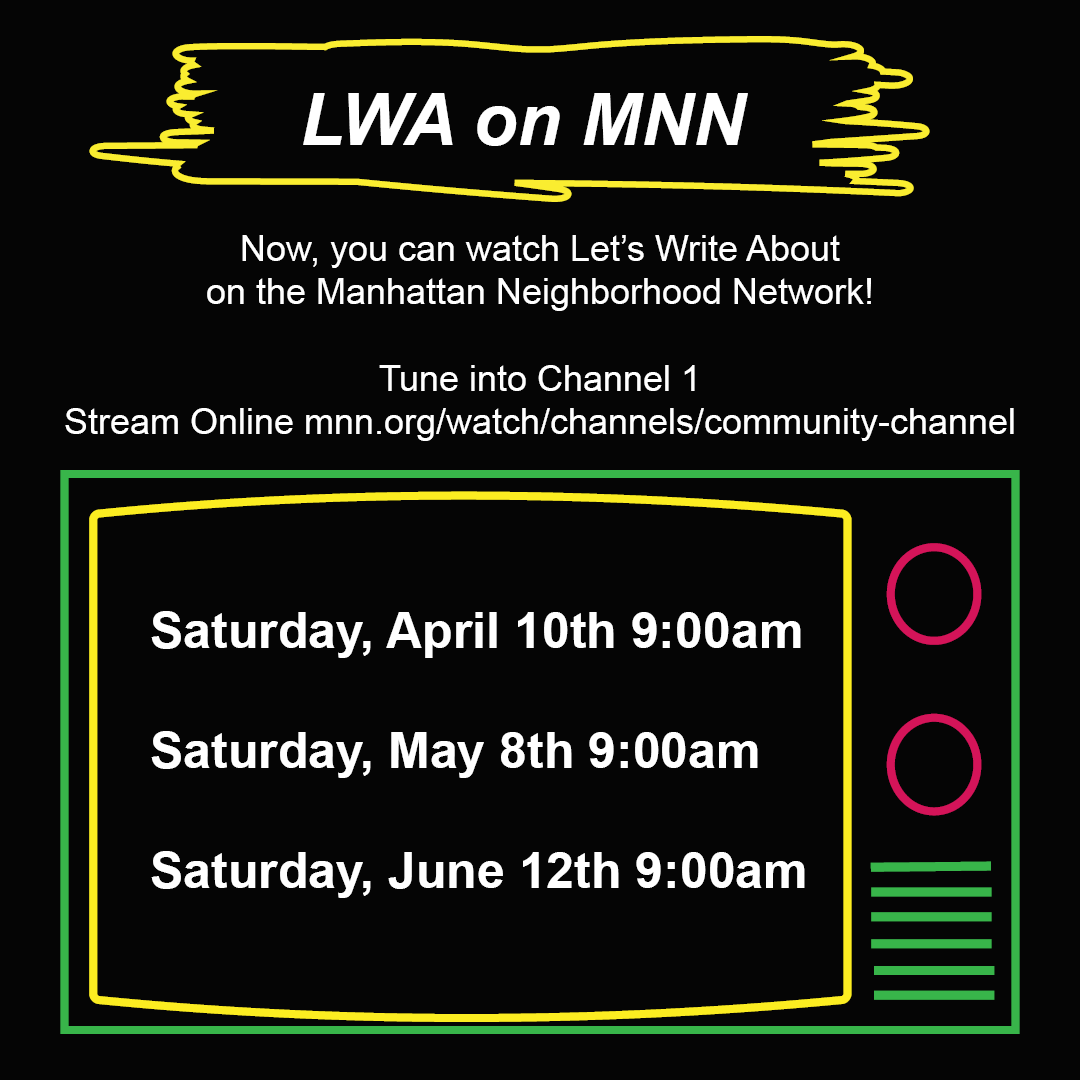
IMG: Yellow squiggle frames heading LWA on MNN, white font describes "Now, you can watch Let’s Write About on the Manhattan Neighborhood Network! Tune into Channel 1 Stream Online mnn.org/watch/channels/community-channel" Below a colorful antique TV…

New York, New York: On Saturday March 13, 2021, Let’s Write About began airing on Manhattan Neighborhood Network’s Channel 1. Let’s Write About is an inclusive children’s arts and education show with a born-accessible approach to production. The show considers varying audience experiences from pre-production to release and integrates audio descriptions, American Sign Language, and open captions into each episode. Manhattan Neighborhood Network (MNN) operates the borough’s public access television channels which, per their website, are “reaching some 500,000 cable subscribers in the borough.” The show was accepted as part of the station’s Spring Quarter running from March through June and will air once a month.

Upcoming air dates for Let’s Write About:

Saturday 4/10 at 9:00am

Saturday 5/08 at 9:00am

Saturday 6/12 at 9:00am

Viewers without cable or outside Manhattan can live stream from the MNN site on the dates and times listed using the link: https://www.mnn.org/watch/channels/community-channel-1

Following the news Donnie Welch, creator and producer of Let’s Write About, said, “Saturday morning is such an exciting time for the show, maybe poetry can become as much a part of Saturday mornings as cereal! I’m looking forward to the show reaching a new audience. Virtual learning has shown that not all families in the city have equitable access to internet. I hope the show can now reach kids who might not be able to access it online.” Welch plans to continue submitting Let’s Write About to future quarterly programming windows at MNN.

About Let’s Write About: Let’s Write About is an inclusive, born-accessible children’s show exploring social-emotional themes through writing and inspiring inquiry-based learning with movement and sensory activities kids of all abilities can do at home. A fiscally sponsored project of the 501(c)(3) non-profit Accessible Festivals, the show carries on their sponsor’s mission by creating quality, accessible educational television.